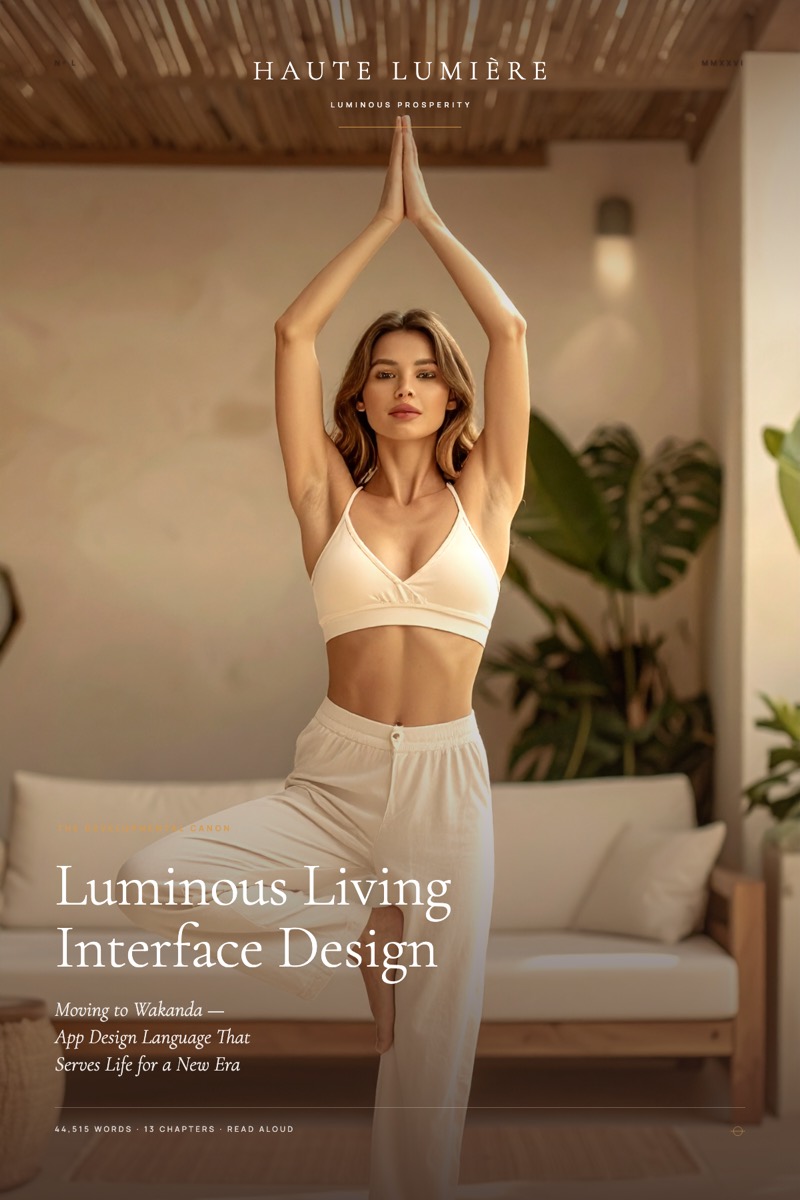
Overview & Framework Record
Assessment Domain. Evaluates the degree to which any digital interface or design system serves life (Wakandan) versus extracts from life (Manhattan). Measures across five dimensions: Bioluminescence (inner light vs projected light), Kinetic Intelligence (life-following motion vs addictive motion), Organic Architecture (grown vs built), Depth-Space-Breath (spaciousness vs compression), and Cultural Sovereignty (serves users vs extracts from users).
Asessment. To conduct a full assessment of the Luminous Living Interface Design™ methodology, evaluate the following aspects based on the properties outlined:
- Somatic Dimension: Assess how the design language serves to regulate the nervous system, creates a sense of safety, and respects the body's natural rhythms. Examine the warmth of the interface and its capacity for creating spaciousness.
- Assessment Domain: Measure the design against the five dimensions:
- Bioluminescence: Consider inner light versus projected light.
- Kinetic Intelligence: Evaluate life-following motion against addictive motion.
- Organic Architecture: Determine if the design is grown rather than built.
- Depth-Space-Breath: Analyze spaciousness versus compression.
- Cultural Sovereignty: Investigate whether the design serves users or extracts from them.
- Source Model: Reflect on how well the design draws from Afrofuturist principles, biomimicry, embodied cognition, Ubuntu philosophy, and critiques of traditional Silicon Valley design paradigms.
- Chapters Overview: Review the content of each chapter to ensure alignment with the overarching philosophy and practical application of the design methodology.
Use this framework to systematically evaluate the design, ensuring that all dimensions contribute to a methodology that genuinely serves life in a new era.
Best Practices. When utilizing the Luminous Living Interface Design™ framework, consider the following best practices:
- Somatic Awareness: Design interfaces that actively engage the user's physical sensations. Ensure that interactions are intuitive and responsive to touch, gaze, and body posture.
- Nervous System Regulation: Incorporate principles of polyvagal-informed design to create a calming environment. Use color and motion thoughtfully to promote a sense of safety rather than urgency.
- Natural Rhythms: Respect the body's natural rhythms by avoiding features like infinite scrolling and excessive notifications, which can disrupt user engagement.
- Warmth and Connectivity: Ensure that the interface feels inviting and warm, both in aesthetics and functionality, creating a sense of connection.
- Spaciousness: Prioritize design elements that foster a sense of spaciousness, allowing users to breathe and feel at ease rather than compressed by overwhelming information.
- Bioluminescence: Focus on inner light and essence rather than just superficial aesthetics, ensuring that the design resonates with the user's inner experiences.
- Kinetic Intelligence: Integrate motion that aligns with life’s natural movements, avoiding addictive patterns that draw users in without purpose.
- Organic Architecture: Embrace growth-oriented design principles that reflect natural development rather than rigid, built environments.
- Cultural Sovereignty: Prioritize designs that serve the community and its cultural values, ensuring that technology enhances rather than extracts from the lives of its users.
- Living Design Elements: Transition from static interfaces to dynamic surfaces that respond and adapt to users’ needs and interactions.
By following these practices, designers can create meaningful, life-affirming digital experiences that resonate with users and honor their embodied interactions.
Book Outline. ### Book Outline for "Luminous Living Interface Design™: Moving to Wakanda"
- Introduction
- Overview of the Wakandan design philosophy and its significance.
- Contrast with traditional design paradigms, particularly Manhattan.
- Purpose of the book and intended audience.
- Chapter 1: The Two Cities — Wakanda and Manhattan as Design Paradigms
- Detailed exploration of the cultural and philosophical differences.
- Case studies showcasing successful designs from both paradigms.
- Chapter 2: Bioluminescence — Design That Glows from Within
- Principles of bioluminescent design.
- Practical applications in digital interfaces.
- Chapter 3: Kinetic Intelligence — Interfaces That Move with Life
- Understanding life-following motion versus addictive motion.
- Examples of kinetic design in action.
- Chapter 4: Organic Architecture — Grown, Not Built
- The importance of organic and sustainable design.
- Techniques for creating organic interfaces.
- Chapter 5: Depth and Breath — Space as Sacred Design Element
- The role of space in design and user experience.
- Strategies for incorporating depth and breath in interfaces.
- Chapter 6: Cultural Sovereignty — Technology That Serves the Life of Its People
- Importance of cultural context in design.
- How to ensure technology serves users effectively.
- Chapter 7: The Living Grid — From Dead Panels to Living Surfaces
- Transitioning from static interfaces to dynamic, living designs.
- Future possibilities for living surfaces.
- Chapter 8: Universal Embodiment — Designing for How All People Live
- Embracing diversity in design.
- Techniques for inclusive design that respects all users.
Additional Suggestions for Exceptional Foundations
- Case Studies and Real-World Examples: Incorporate case studies from various industries that have successfully applied the Wakandan design principles. This will provide readers with practical insights and inspiration.
- Visual Elements: Include diagrams, illustrations, and photographs that exemplify key concepts. Visual aids will enhance understanding and engagement.
- Interactive Components: Consider offering accompanying digital resources, such as an interactive website or app, where readers can explore the principles in real-time.
- Expert Contributions: Invite guest chapters or forewords from industry leaders in design, technology, and cultural studies to lend credibility and diverse perspectives.
- Workshops and Exercises: Provide exercises at the end of each chapter to encourage readers to apply the concepts to their own projects, enhancing the book’s practical value.
- Glossary and Resources: A glossary of terms and a list of further reading materials can help readers deepen their understanding of the concepts discussed.
This combination of a structured outline and additional elements will make the book a foundational and definitive resource in the field of interface design.
Book Title Suggestions. 1. Luminous Interfaces: Designing for Life in a Digital Era
- Wakandan Wisdom: Crafting Technology that Nurtures Humanity
- Bioluminescent Design: A New Paradigm for Digital Interaction
- Kinetic Intelligence: Interfaces that Harmonize with Human Experience
- Organic Architecture: Building Digital Spaces that Breathe
- Cultural Sovereignty: Empowering Users through Thoughtful Design
- The Living Grid: Transforming Digital Surfaces into Responsive Environments
- Depth and Breath in Design: Creating Sacred Spaces in Technology
Framework Skeleton. # Framework Skeleton
Title
Luminous Living Interface Design™: Moving to Wakanda — App Design Language That Serves Life for a New Era
Properties
Somatic Dimension
- The Wakandan design language is inherently somatic.
- It recognizes human interaction with technology through various bodily experiences.
- A Luminous interface must:
- Regulate the nervous system (polyvagal-informed design).
- Use color, motion, and depth to create a sense of safety.
- Honor natural bodily rhythms.
- Feel warm and alive to the touch.
- Create spaciousness rather than compression.
Assessment Domain
- Evaluates the life-serving versus life-extracting nature of digital interfaces.
- Measures across five dimensions:
- Bioluminescence
- Kinetic Intelligence
- Organic Architecture
- Depth-Space-Breath
- Cultural Sovereignty
Source Model
- Original Luminous Prosperity framework by Ammanuel Santa Anna.
- Incorporates Afrofuturist design philosophy, biomimicry, embodied cognition, Ubuntu philosophy, and critiques of Silicon Valley design.
Content
- The Two Cities — Wakanda and Manhattan as Design Paradigms
- Bioluminescence — Design That Glows from Within
- Kinetic Intelligence — Interfaces That Move with Life
- Organic Architecture — Grown, Not Built
- Depth and Breath — Space as Sacred Design Element
- Cultural Sovereignty — Technology That Serves the Life of Its People
- The Living Grid — From Dead Panels to Living Surfaces
- Universal Embodiment — Designing for How All People Live
Key Innovations. Key innovations of the Luminous Living Interface Design™ include:
- Somatic Dimension: The design recognizes human interaction through touch, gaze, and bodily states, aiming to regulate the nervous system and create a sense of felt safety.
- Bioluminescence: Interfaces are designed to glow from within, emphasizing inner light over projected light, thus promoting a more organic and vibrant user experience.
- Kinetic Intelligence: Interfaces are developed to move with life, avoiding addictive motion and instead following natural rhythms.
- Organic Architecture: The approach focuses on grown rather than built environments, enhancing the relationship between users and technology.
- Cultural Sovereignty: Technology is designed to serve the life of its users, emphasizing cultural relevance and respect.
- Depth and Breath: Space is treated as a sacred design element, promoting spaciousness over compression.
- The Living Grid: Transitioning from static, lifeless panels to dynamic, living surfaces that interact with users.
- Universal Embodiment: Designs that cater to the diverse ways in which all people live, ensuring inclusivity and accessibility.
Role in Ecosystem. The Luminous Living Interface Design™ plays a crucial role in the luminous prosperity ecosystem by embodying a somatic design philosophy that prioritizes human interaction with technology. It emphasizes creating digital interfaces that enhance well-being and support life, contrasting with traditional extractive design paradigms. By focusing on principles like bioluminescence, kinetic intelligence, and organic architecture, this approach aims to foster environments that feel alive and nurturing, ultimately serving the needs and sovereignty of users rather than exploiting them. Through this framework, the design seeks to integrate technology harmoniously into the lived experiences of individuals and communities.
Somatic Dimension. The Wakandan design language is inherently somatic. It recognizes that humans interact with technology through their bodies — through touch, gaze, posture, breath, and nervous system states. A Luminous interface must:
- Regulate rather than dysregulate the nervous system (polyvagal-informed design)
- Use color, motion, and depth to create felt safety rather than anxious urgency
- Honor the body's natural rhythms rather than overriding them with infinite scroll and notification bombardment
- Feel warm to the touch — metaphorically and literally — as if the interface has a pulse
- Create somatic spaciousness rather than compression
Source Model. Original Luminous Prosperity framework by Ammanuel Santa Anna. Draws on Afrofuturist design philosophy, biomimicry, embodied cognition research, Ubuntu philosophy, Christopher Alexander's pattern language, and critiques of extractive Silicon Valley design paradigms.
Synergies & Cross-Pollination. The Luminous Living Interface Design™ framework emphasizes the need for synergies and cross-pollination between various methodologies that promote life-affirming technology. By integrating principles from Afrofuturist design philosophy, biomimicry, and embodied cognition, the design seeks to cultivate a harmonious interaction between users and technology. This approach aligns with the somatic dimension of the Wakandan design language, which prioritizes human experience and well-being through mindful engagement with digital interfaces. The focus on cultural sovereignty ensures that technology is developed to serve the needs of its people, fostering a sense of community and connection rather than exploitation. By embracing these methodologies, designers can create interfaces that resonate with users on a deeper level, promoting a sense of safety, spaciousness, and organic interaction.
Text. The Luminous Living Interface Design™ framework emphasizes a somatic approach, recognizing human interaction with technology through bodily experiences. It seeks to create interfaces that regulate the nervous system, promote natural rhythms, and foster a sense of safety and warmth. The framework evaluates design across five dimensions: Bioluminescence, Kinetic Intelligence, Organic Architecture, Depth-Space-Breath, and Cultural Sovereignty. Drawing on Afrofuturism, biomimicry, and critiques of traditional design paradigms, it contrasts the life-serving principles of Wakanda against the extractive tendencies of Manhattan, aiming to establish technology that genuinely serves its users.
Text 1. ### Luminous Technology Derived from the Work
- Somatic Interfaces: Develop interfaces that respond to human bodily cues such as touch, gaze, and posture, ensuring they promote a sense of safety and well-being.
- Bioluminescent Feedback Systems: Create designs that utilize inner light concepts to enhance user experience, providing visual cues that reflect user engagement and emotional states.
- Kinetic Interaction Models: Implement motion dynamics in interfaces that align with natural human movement patterns, encouraging fluid interaction rather than addictive scrolling behaviors.
- Organic Architecture Elements: Focus on designs that mimic natural growth processes, creating structures that evolve with user interaction rather than being rigidly built.
- Depth and Spaciousness Design: Prioritize designs that incorporate spaciousness and breathing room, moving away from cluttered interfaces towards environments that feel expansive and calming.
- Cultural Sovereignty Integration: Ensure that technology design respects and serves the cultural identities of its users, fostering a sense of belonging and ownership.
- Living Surface Technologies: Develop interactive surfaces that respond to user input with dynamic changes, creating a more engaging and lifelike interaction experience.
- Universal Embodiment Features: Design technologies that accommodate diverse ways of living and interacting, making them accessible and relevant to all users.
Text 3. To reinforce the Luminous ecosystem, several works could emerge, including:
- Workbooks: Interactive guides that help users apply the principles of the Wakandan design language in their projects, fostering a deeper understanding of somatic design.
- Apps: Tools that embody the Luminous Living Interface Design™ principles, providing users with interfaces that enhance well-being, regulate the nervous system, and promote organic interaction.
- Integrations: Collaborations with existing platforms that prioritize somatic dimensions, allowing for seamless incorporation of Luminous principles into daily technology use.
- Community Initiatives: Platforms for practitioners and advocates of Luminous design to share experiences, resources, and ideas, fostering a supportive network focused on life-serving technology.
- Spin-offs: New projects or sub-brands that explore specific aspects of Luminous design, such as sustainable materials for interface creation or workshops focused on embodied cognition in technology.
These elements would collectively contribute to a thriving ecosystem centered on holistic, life-affirming design practices.
Text 4. The "Luminous Living Interface Design™" presents a design philosophy rooted in somatic experiences, emphasizing human interaction with technology through physical and emotional states. It contrasts the life-serving design of Wakanda with the extractive paradigms of Manhattan, focusing on bioluminescence, kinetic intelligence, organic architecture, cultural sovereignty, and the sacredness of space in design. This approach draws from various philosophical and design frameworks to create interfaces that nurture rather than exploit human life.
The App. To operationalize the teachings of the Luminous Living Interface Design™ within a mobile transformative experience, the app will integrate several key features and models:
App Features:
- Somatic Interface:
- Incorporate haptic feedback that responds to user touch, providing a warm, pulsing sensation to create a sense of safety and connection.
- Use color schemes and animations that promote calmness and reduce anxiety, aligning with polyvagal-informed design principles.
- Kinetic Intelligence:
- Implement adaptive interfaces that respond to user movements and body language, allowing for a more intuitive interaction that feels alive and responsive.
- Include motion-based activities that encourage users to engage with technology in ways that align with their natural rhythms.
- Bioluminescence:
- Design aesthetic elements that glow softly, representing inner light and promoting a sense of well-being. Use ambient lighting that changes based on the time of day or user activity.
- Organic Architecture:
- Create a layout that feels natural and is easy to navigate, resembling organic growth patterns rather than traditional grid systems.
- Allow users to customize their interface to reflect personal preferences and experiences, making the app feel uniquely theirs.
- Cultural Sovereignty:
- Include content and resources that are culturally relevant and affirming, ensuring that the app serves its users rather than extracting from them.
- Collaborate with community leaders and cultural experts to curate experiences that resonate with diverse user backgrounds.
Watch Complications:
- Health Monitoring: Integrate real-time health metrics (heart rate, stress levels) that inform users when they need to take a break or engage in mindfulness practices.
- Notification Management: Provide gentle alerts for activities or reminders that encourage users to pause, breathe, and reconnect with their bodies.
Models for Implementation:
- Therapists and Coaches:
- Partner with mental health professionals and life coaches to provide in-app guidance and support, allowing users to engage in therapeutic exercises and reflective practices.
- Include features for scheduling sessions, tracking progress, and accessing resources tailored to individual needs.
- Institutions:
- Collaborate with educational and wellness institutions to offer curated content, workshops, and interactive experiences that foster community and collective well-being.
- Develop partnerships to integrate the app into existing programs focused on holistic health and personal development.
Conclusion:
This app will not only serve as a transformative tool for individual users but will also foster a community that embodies the principles of the Luminous Living Interface Design™. By prioritizing somatic experiences, cultural relevance, and responsive design, this mobile platform can redefine how technology serves human life in a new era.
Where We Agree. Luminous Prosperity embraces the concept of a somatic design language that serves life by focusing on human interactions with technology through the body. This approach is evident in its emphasis on polyvagal-informed design, where the interface is designed to regulate the nervous system rather than dysregulate it. By utilizing elements such as color, motion, and depth, it aims to create a sense of safety and honor the body's natural rhythms, contrasting with traditional designs that often overwhelm users with notifications and infinite scrolling.
The extent of Luminous Prosperity's embrace of this concept is reflected in its assessment domain, which evaluates digital interfaces across dimensions like Bioluminescence, Kinetic Intelligence, and Cultural Sovereignty. This framework highlights the importance of designing technology that supports and uplifts users, rather than extracting from them, thus aligning with the principles of Afrofuturism and embodied cognition. By fostering an environment that feels warm and spacious, Luminous Prosperity seeks to create a harmonious interaction between humans and technology.
Where We Diverge. Luminous Prosperity diverges from traditional design paradigms by prioritizing human experience and well-being over mere functionality and profit extraction. Instead of relying on the conventional, often extractive methods seen in places like Manhattan, it emphasizes a somatic approach that considers how technology interacts with our bodies and natural rhythms. This involves using design elements that promote safety, warmth, and spaciousness, creating interfaces that feel alive and responsive. By augmenting technology with principles drawn from Afrofuturism, biomimicry, and embodied cognition, we shift from a focus on built environments to those that are grown and integrated with life, ensuring that technology serves the community and enhances cultural sovereignty rather than exploiting it.
Chapter 1: The Two Cities — Wakanda and Manhattan as Design Paradigms
Chapter 3: Kinetic Intelligence — Interfaces That Move with Life
Chapter 4: Organic Architecture — Grown, Not Built
Chapter 2: Bioluminescence — Design That Glows from Within
Chapter 6: Cultural Sovereignty — Technology That Serves the Life of Its People
Chapter 7: The Living Grid — From Dead Panels to Living Surfaces
Chapter 5: Depth and Breath — Space as Sacred Design Element
Chapter 8: Universal Embodiment — Designing for How All People Live
Chapter 9: The Extraction Reversal — Technology That Gives More Than It Takes
Chapter 10: The Migration Methodology — Moving Your Team from Manhattan to Wakanda
Chapter 11: Visionary Examples Across Domains — What Wakanda Looks Like When It's Real
Chapter 12: The Luminous Design System Specification — From Dream to Blueprint
---